Waterproof Labels for Candles: What Actually Survives Heat, Wax & Oil
Candle labels look like the easy part. You pick a pretty design, stick it on the jar, light the wick, done.
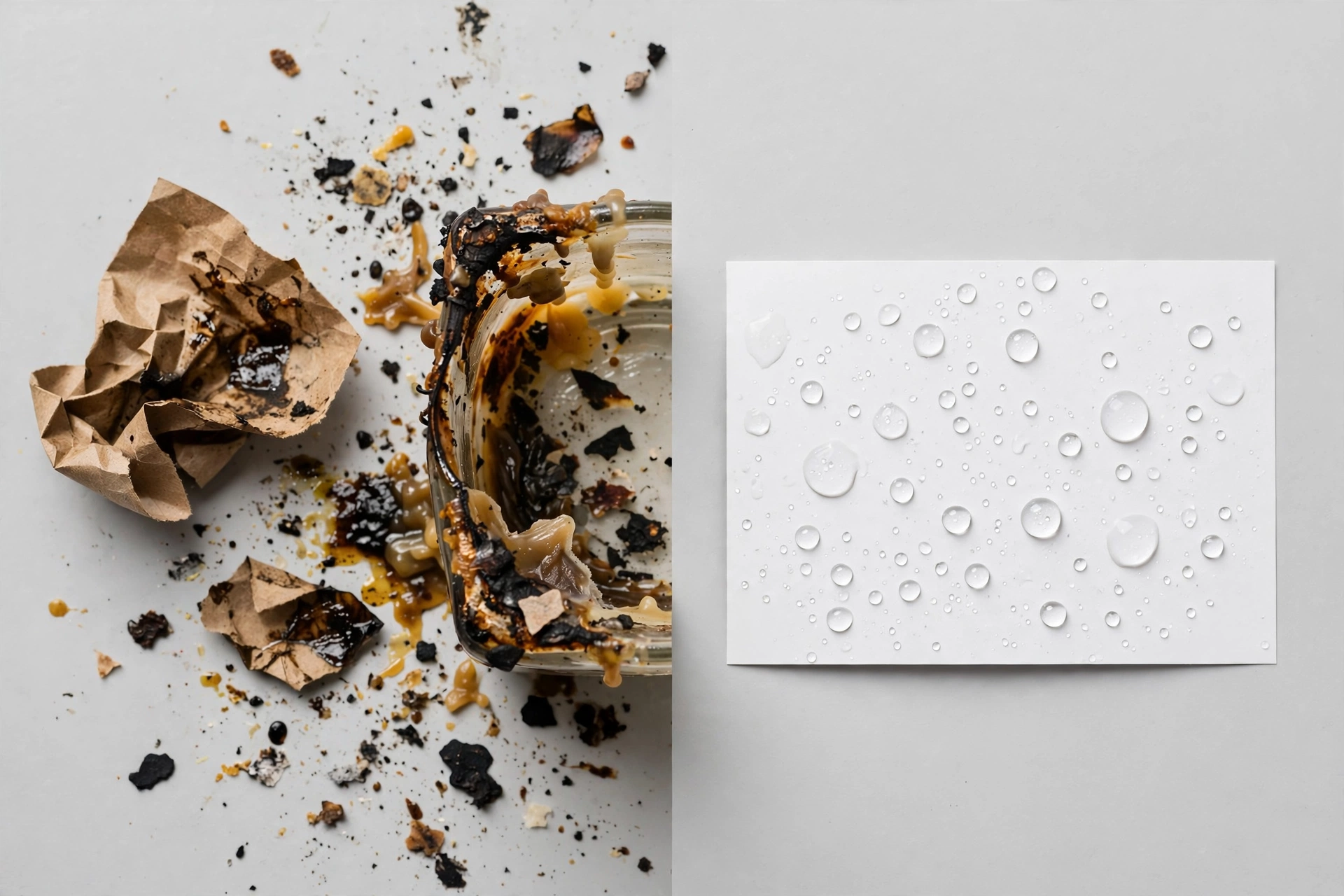
Then the real world shows up: fragrance oil weeps out of the wax and creeps under the label edge. A splash of spilled wax hardens across the artwork. Condensation forms when the jar heats and cools. A few weeks later the label is lifting, staining, or smudging — on a product whose entire selling point is looking beautiful on a shelf.
Here’s the uncomfortable truth most candle makers learn the expensive way: a candle is one of the harshest environments a label can live in. It combines heat, oil, wax, and moisture in a way that destroys ordinary labels fast. This guide explains which materials actually survive candle life — and the three failure modes that have nothing to do with “waterproof.”
Why Candle Labels Fail (It’s Not Just Water)
When people search for “waterproof candle labels,” they’re usually picturing a label getting wet. But water is only one of four enemies:
- Heat. A burning candle warms the entire jar, and the label sits directly on that heated glass. Many adhesives soften with sustained warmth, and edges start to lift — especially near the top of the jar closest to the flame.
- Fragrance oil. This is the silent killer. Fragrance oils migrate: they seep through wax, sweat out of the container, and get on fingers during handling. Oils dissolve many inks and soften many adhesives. A label that survives water can still die to oil.
- Wax. Spills and drips are inevitable in candle making and use. Hot wax bonds to paper instantly and stains it permanently.
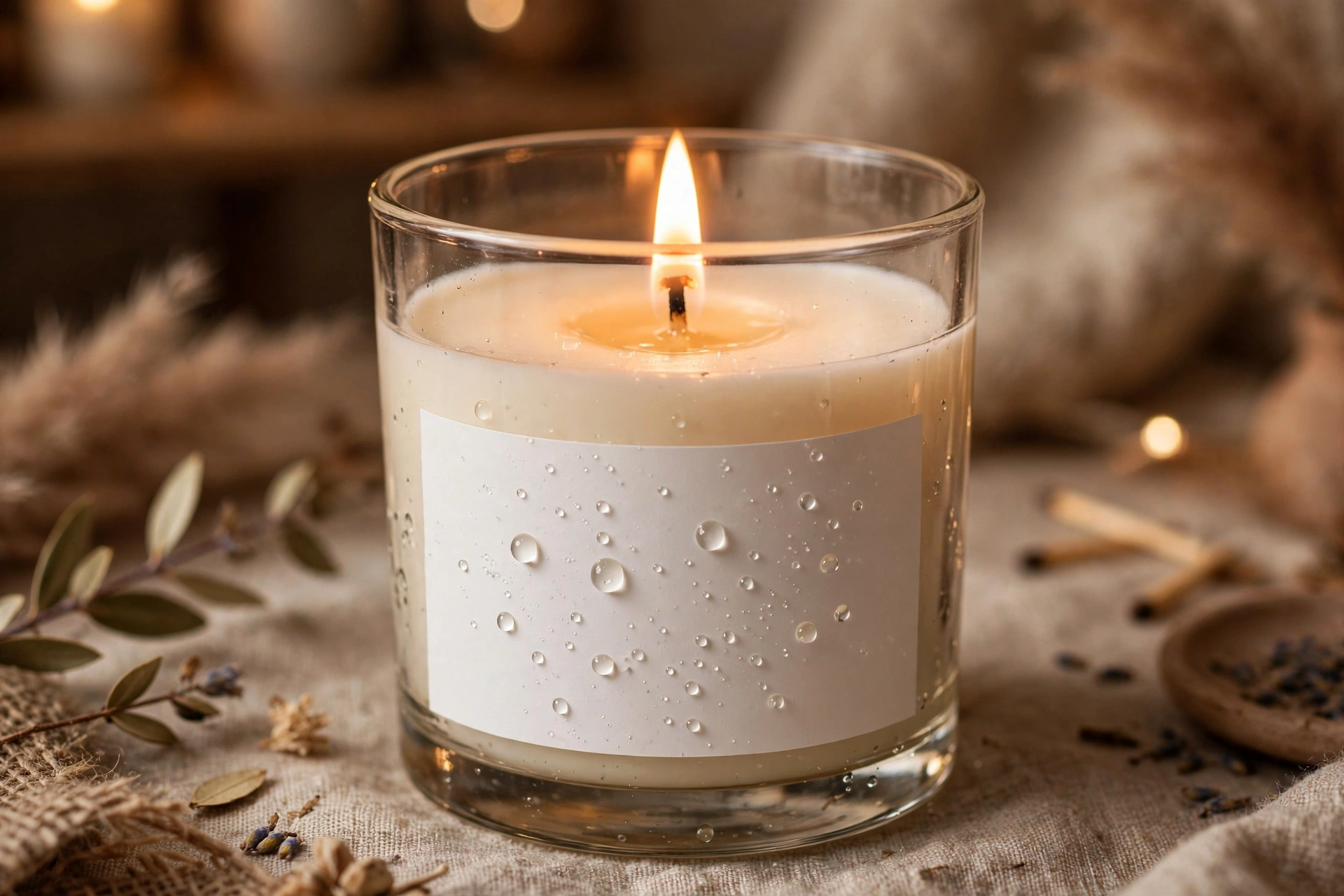
- Condensation and humidity. Bathrooms, humid climates, and the heating-cooling cycle of a burning candle all put moisture on the label surface. Paper absorbs it; ink runs.
A label that only resists water fails a candle’s real test. You need resistance to water, oil, heat, and wax — all four, in the full construction: face material, ink, adhesive, and finish.
The Materials That Actually Survive
BOPP: The Candle Industry Standard
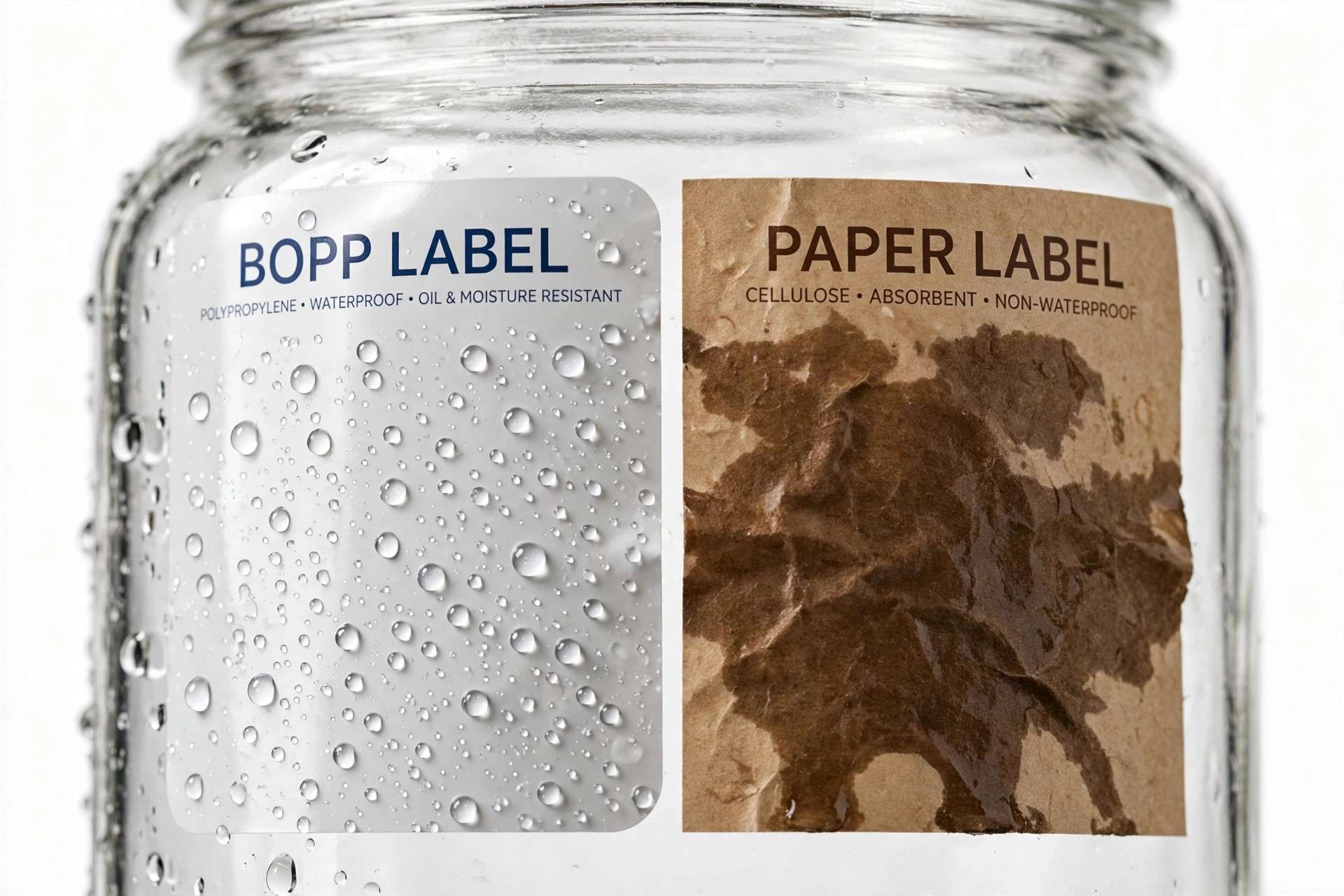
BOPP (biaxially oriented polypropylene) is the default choice of serious candle brands, and for good reason. It’s a thin plastic film that resists water, oil, and condensation, and it gives that premium “no-label look” — the artwork appears printed directly on the glass.
Why BOPP wins for candles:
- Oil resistant — fragrance oil and fingerprints don’t penetrate or stain it
- Waterproof — condensation and humidity bead up instead of soaking in
- Wax wipes off — spilled wax releases from the film surface instead of bonding to it
- Thin and conforming — wraps cleanly around jars and tins without lifting
- Available in white, clear, and metallic — clear BOPP on glass looks genuinely premium
The one limitation: BOPP’s adhesive needs to be specified for the job. Standard BOPP adhesive is fine for room-temperature jars, but if your candles ship through hot warehouses or sit in sunny storefronts, ask your printer about a high-tack or heat-tolerant adhesive. The film survives heat; cheap adhesive doesn’t.
Vinyl: The Heavy-Duty Alternative
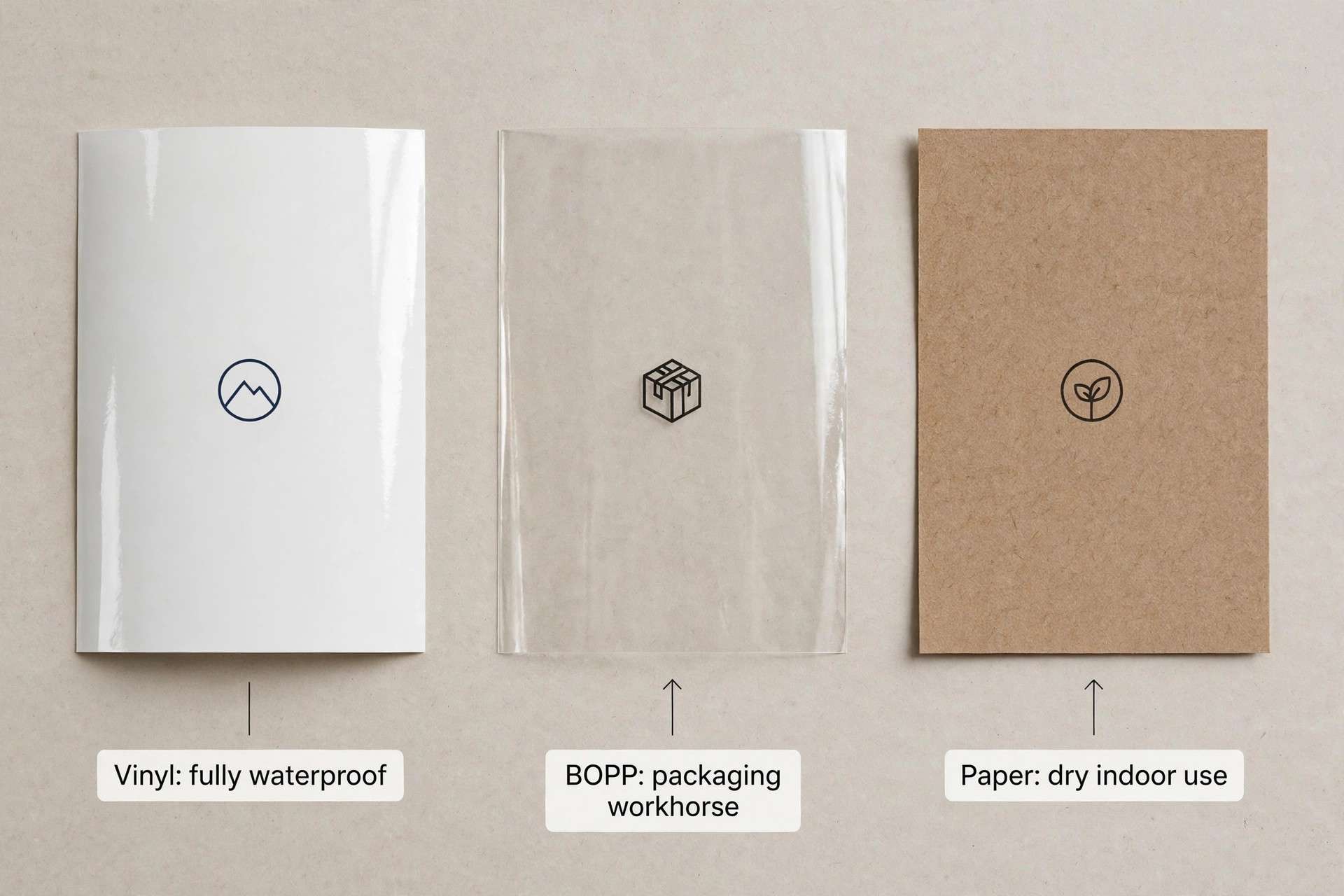
Vinyl is thicker and more rugged than BOPP — fully waterproof, UV resistant, and extremely durable. It’s overkill for most candles, but it earns its place in specific cases:
- Candles sold or used outdoors (patio, camping, garden lines)
- Tin containers with tight curves, where vinyl’s flexibility prevents edge lifting
- Products that get rough handling in shipping and retail
The trade-offs: vinyl costs more than BOPP, and its thicker profile doesn’t give the same “printed on glass” feel. For an indoor luxury candle, BOPP looks better and costs less.
Paper: The Beautiful Mistake
Paper labels — especially kraft and textured stocks — look gorgeous on candles. The natural texture photographs well and signals “handmade.” And paper is the cheapest option, which matters when you’re ordering your first 500 labels.
But paper fails candles in every way that counts:
- Oil stains it permanently. One fingerprint of fragrance oil leaves a dark blotch that never comes out.
- Wax bonds to it. A single drip becomes part of the label forever.
- Condensation ruins it. Humidity cockles the paper and blurs the ink.
- Heat accelerates all of the above. Warm paper absorbs oil and moisture faster.
There is exactly one safe use of paper on candles: the outer packaging — the box, the dust cover, the hang tag. Anywhere the paper never touches wax, oil, or a heated jar, its beauty is an asset. On the jar itself, paper is a liability.
The short version: for the jar, order BOPP (or vinyl for outdoor/tin edge cases). Save paper for the box it ships in. Still weighing the three materials? Our vinyl vs. BOPP vs. paper guide compares them side by side.
It’s Not Just the Material: Adhesive and Finish
Two candle makers can order the “same” BOPP label and get different results. The difference is usually the adhesive and the finish — the parts of the label nobody asks about.
Adhesive: The Hidden Failure Point
The face film can be perfectly oil-proof while the adhesive quietly gives up. What to specify:
- Confirm the adhesive is rated for the full construction. A waterproof film with a water-soluble adhesive is a waterproof label that falls off in the shower. Same principle with heat: ask whether the adhesive holds at the temperatures your jar reaches.
- Glass vs. tin vs. ceramic need different tack. Smooth glass is easy; powder-coated tins and textured ceramics need higher-tack adhesive. Tell your printer the exact container.
- Test on YOUR container. Adhesive performance depends on surface energy, curvature, and temperature cycling. A sample run on your actual jar is worth more than any spec sheet.
Finish: Your Oil and Scuff Shield
The finish (laminate or coating) is what the customer’s fingers actually touch:
- Gloss laminate — maximum protection against oil, wax, and scuffs; makes colors pop. The workhorse choice for candles.
- Matte laminate — the premium look most luxury candle brands want, still fully protective. Fingerprints show less on matte than gloss.
- No laminate (uncoated ink) — don’t. Unprotected ink on a candle label absorbs oil and scuffs within weeks, even on BOPP.
The cost difference between laminated and unlaminated is small. The durability difference is enormous. Always laminate candle labels.
The Candle Label Survival Test
Before you commit to a bulk order, run this 10-minute test on samples from your printer. It simulates a month of candle life:
- The oil test. Rub a drop of your actual fragrance oil across the label and leave it for 24 hours. Then try to wipe it off. Any staining, ink smear, or softening = fail.
- The wax test. Drip hot wax from your candle onto the label, let it cool, then peel it off. It should release cleanly from a laminated film. If it bonds or stains = fail.
- The heat test. Stick the label on your jar, burn the candle for 4 hours, and check the edges — especially the top edge nearest the flame. Any lifting or bubbling = fail.
- The water test. Hold the labeled jar under running water for 30 seconds, then dry it. The label should look identical. Any cockling, ink bleed, or edge lift = fail.
A label that passes all four will survive real customers. One that fails any of them will generate the exact complaints — “the label is peeling,” “there’s a stain on it” — that tank a candle brand’s reviews.
Design Tips That Prevent Failures
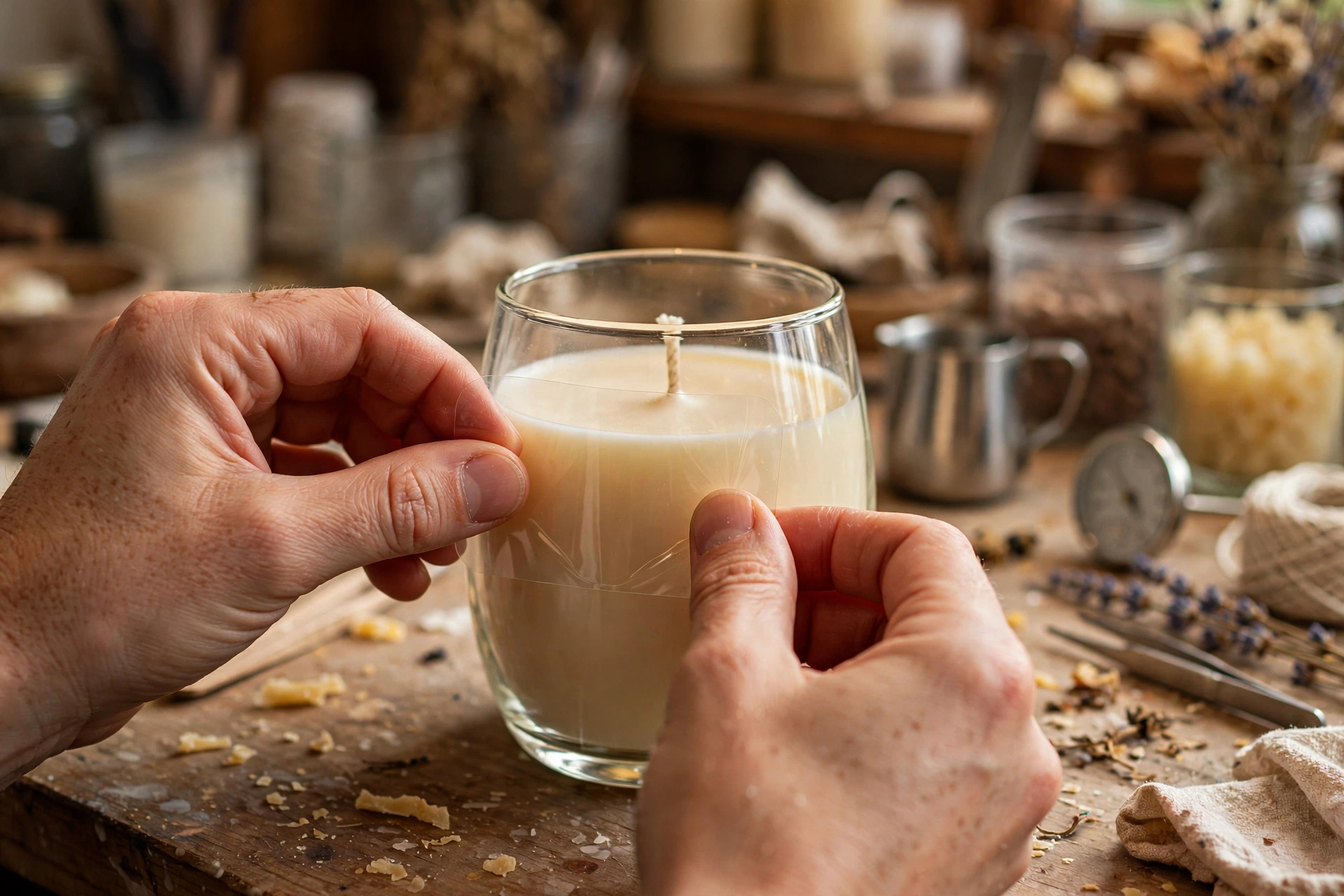
Material choice does most of the work, but smart design prevents the rest:
- Keep the label away from the heat zone. On a tall jar, place the label lower, away from the rim where heat concentrates. Never wrap a label over the rim.
- Leave a bleed-friendly margin. Artwork should extend 3mm past the cut line (bleed) so a slightly misaligned cut doesn’t leave a white edge — white edges show oil stains first.
- Avoid dark full-bleed backgrounds on the bottom edge. The bottom of the jar collects wax drips and oil; a light design there hides sins better.
- Include the legally required info. Candle labels in the US typically need the business name and address, net weight, and safety warnings. Your printer doesn’t know your local rules — you do.
- Size for the jar, not the mockup. A label that looks perfect in a digital mockup can wrap too far around a small jar and overlap itself. Measure the jar’s circumference and keep the label to 70–80% of it.
Frequently Asked Questions
Are BOPP labels really waterproof enough for candles?
Yes — with the right adhesive and laminate. BOPP film itself is fully waterproof and oil resistant. The failures people blame on “BOPP” are almost always the adhesive (wrong tack for the container) or unprotected ink (no laminate). Specify both and BOPP is the most reliable candle label material available.
Can I use kraft paper labels on my candle jars?
Not on the jar. Kraft paper is beautiful but absorbs fragrance oil, bonds with spilled wax, and cockles with condensation. Use kraft for the outer box, the dust cover, or a hang tag — anywhere it stays dry and away from heat. The jar itself needs BOPP or vinyl.
Why is my candle label peeling at the edges?
Three usual suspects, in order: (1) the adhesive wasn’t specified for your container or temperature — heat softens standard adhesives; (2) oil crept under the edge during handling before the adhesive fully cured (labels need 24–72 hours to reach full bond strength — don’t oil-test them on day one); (3) the jar surface had residue — glass fresh from the supplier often carries a thin silicone or dust film. Wipe jars with isopropyl alcohol before labeling.
Do I need waterproof labels if my candles are only sold indoors?
Yes. “Indoors” still includes fragrance oil on fingers, wax drips during pouring, bathroom humidity, and condensation from the heating-cooling cycle. Indoor candles fail from oil and wax far more often than from water. Waterproof is the wrong word for what you need — you need oil-proof, wax-proof, and heat-tolerant.
White BOPP, clear BOPP, or metallic — which should I choose?
It depends on the jar and the brand. White BOPP is the safe default: opaque, readable, works on any jar color. Clear BOPP looks stunning on glass — the “no-label look” — but your artwork needs to work without a white background, and dark wax will show through. Metallic BOPP (silver/gold) gives a luxury foil feel at a fraction of hot-stamping cost. When in doubt, order samples of all three on your actual jar.
How many labels should I order for my first run?
Order for 3–6 months of realistic sales, not your dream forecast. Candle labels are cheap per unit at volume, but a design tweak (new scent, new warning text, rebrand) makes old labels worthless. Most small candle brands land well at 500–2,000 labels for a first run. And always order 10–20% more than the jar count — labeling has a learning curve, and a few will wrinkle.
The Bottom Line
Candle labels fail from oil, wax, heat, and moisture — in that order of sneakiness. The winning formula is simple:
- BOPP film (white, clear, or metallic) for the jar
- Container-matched adhesive, confirmed heat-tolerant
- Laminated finish, gloss or matte — never uncoated
- Paper reserved for the box, the tag, and the dust cover
Run the four-part survival test on samples before your bulk order, and you’ll never learn about label failure from a one-star review.
Still deciding between finishes — or wondering whether your jar needs white or clear BOPP? Browse ZORVOO’s custom waterproof labels or the full Labels & Stickers range, then send us your container details and a photo of the jar — we’ll recommend the exact material, adhesive, and finish for your candle line, with a free digital proof before anything goes to print.