If you’re ordering custom labels for the first time, the material question hits you fast: vinyl? BOPP? Paper? Every printer lists them, the prices are all over the place, and the descriptions read like chemistry homework.
Here’s the plain-English version: the material decides whether your label survives its real life — a shower, a fridge, a sweaty hand, a sunny storefront. Pick wrong and a beautiful design peels, smudges, or bleeds within weeks. Pick right and the same design looks great for years.
This waterproof label material guide walks through the three materials small businesses actually choose between — vinyl, BOPP, and paper — so you can order with confidence the first time.
The Short Version
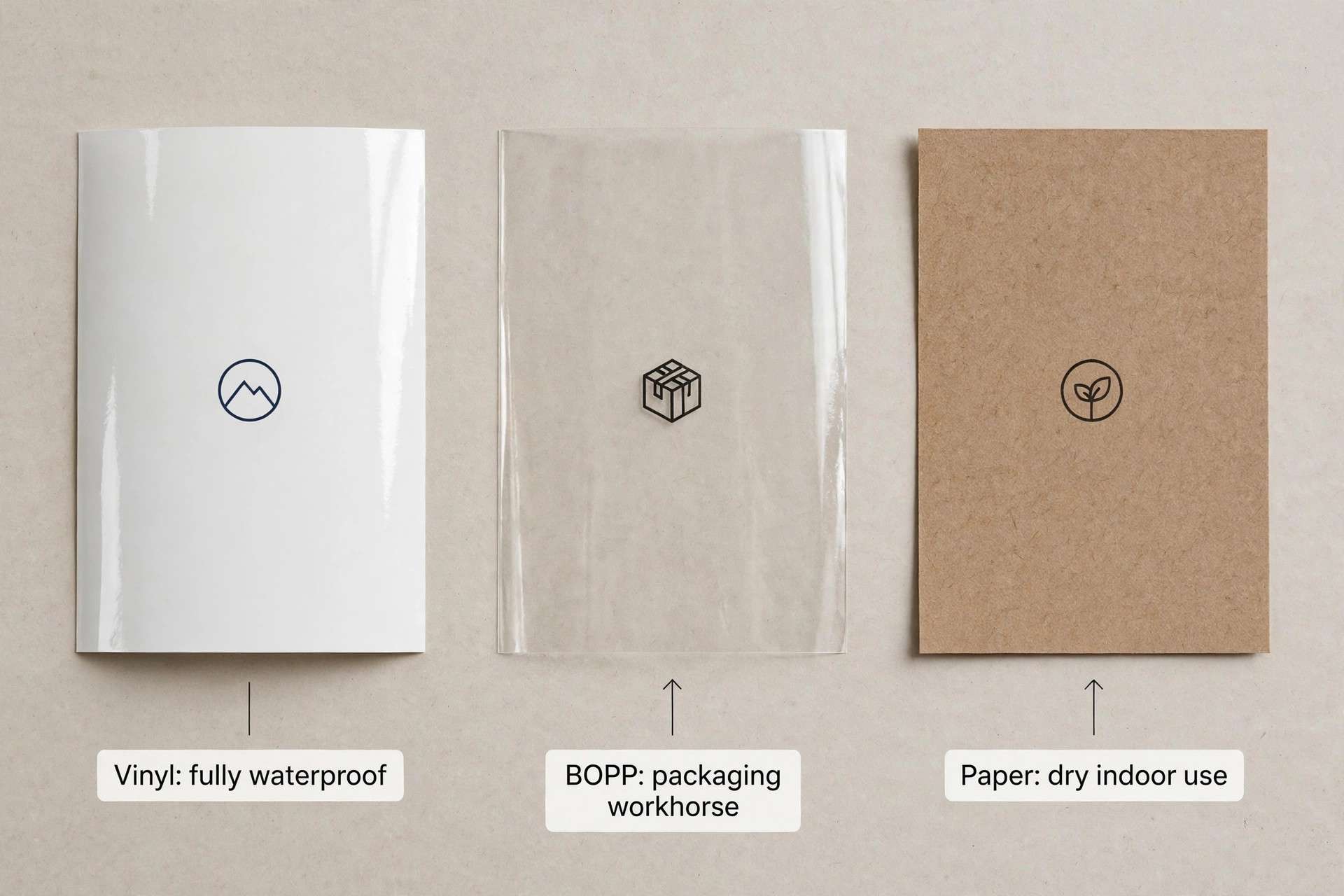
- Vinyl = the tough, flexible all-rounder. Fully waterproof, sticks to curved surfaces, great outdoors. Costs more.
- BOPP (biaxially oriented polypropylene) = the waterproof workhorse for product packaging. Handles water, oil, and refrigeration at a lower price than vinyl. Less flexible on tight curves.
- Paper = the budget-friendly classic. Great for dry, indoor use and premium textures — but it is not waterproof.
If your labels will ever meet water, oil, or refrigeration, shortlist vinyl or BOPP and stop there. If they live indoors on dry packaging, paper may be all you need.
Vinyl Labels: The All-Rounder
Vinyl is a flexible plastic film — the same family of material as car wraps and outdoor decals. It’s the most forgiving label material you can buy:
- Fully waterproof — rain, sweat, splashes, even full submersion
- UV resistant — colors hold up in sunlight far longer than paper
- Flexible — conforms to curved bottles, jars, and tubes without lifting at the edges
- Tear resistant — hard to rip by accident
The trade-offs: vinyl costs more per label than BOPP or paper, and it’s a thicker material, so it doesn’t give the same “printed directly on the box” feel that premium paper does.
Vinyl labels are ideal for: outdoor products, beverages, health and beauty products used in bathrooms, cleaning products, equipment labels — anything that lives near water or sunshine.
BOPP Labels: The Packaging Workhorse
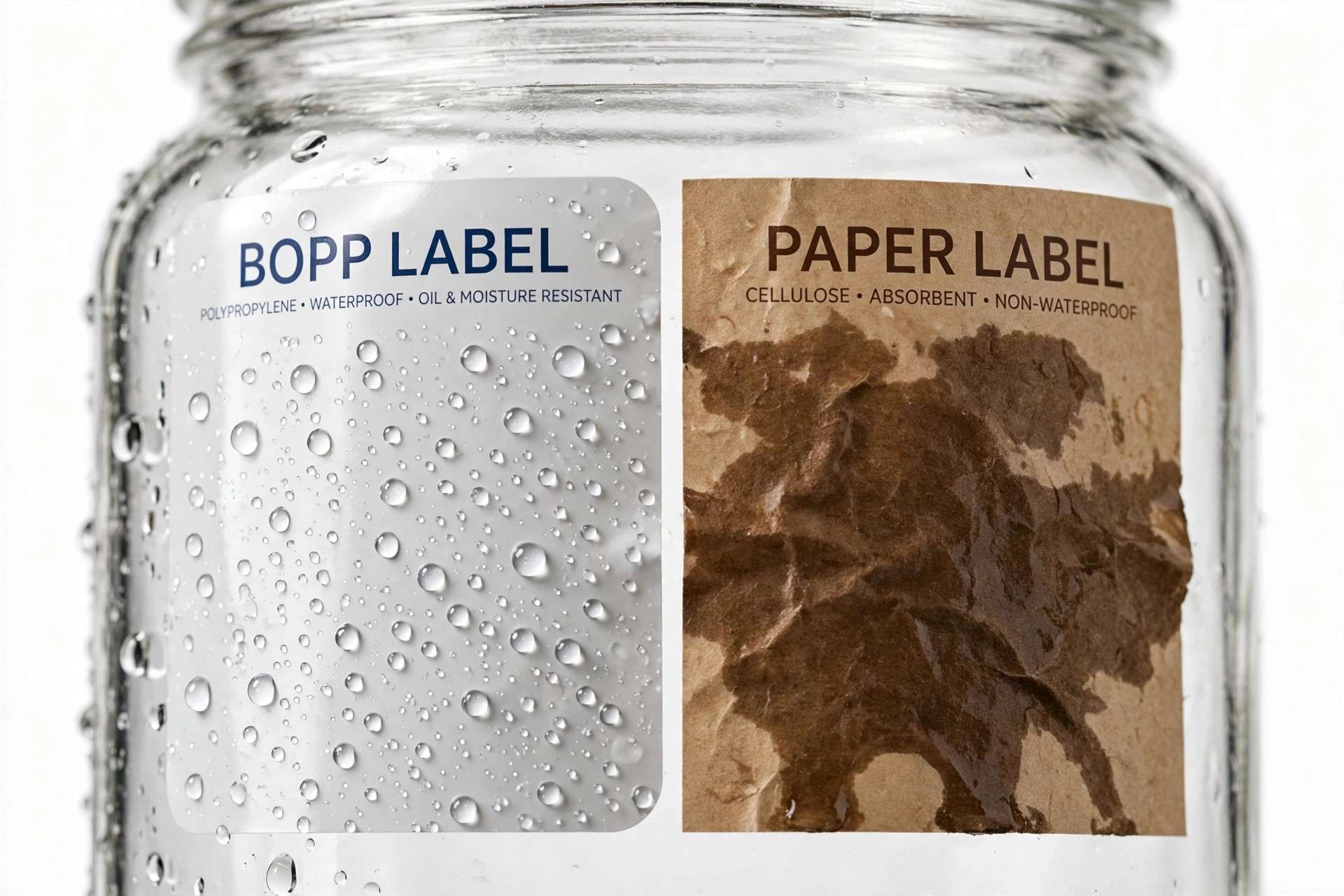
BOPP (biaxially oriented polypropylene) is a thin plastic film that has quietly become the default label material for consumer packaged goods. If you’ve ever noticed that a shampoo bottle’s label looks perfect even after months in the shower, that was probably BOPP.
- Waterproof and oil resistant — handles condensation, refrigeration, oils, and greasy fingers
- Thinner than vinyl — gives a “no-label look” that premium brands love
- More affordable — typically costs less than vinyl, closer to paper pricing at volume
- Great print quality — sharp colors, available in white, clear, and metallic finishes
The trade-offs: BOPP is less stretchy than vinyl, so it can lift on very tight curves (think small-diameter tubes), and it isn’t the best pick for extended outdoor sun exposure.
BOPP labels are ideal for: food and beverage packaging, cosmetics and skincare, candles, supplements, pet products — anywhere a label meets water, oil, or a fridge but stays indoors.
Paper Labels: The Budget-Friendly Classic
Paper is exactly what it sounds like — and it’s still the right choice for a huge number of labels:
- Lowest cost — the cheapest option in almost every quantity
- Premium textures — kraft, cotton, textured finishes that plastic can’t imitate
- Writable — ballpoint and marker friendly (handy for price tags and dates)
- Easy to recycle and compost — the most eco-friendly of the three
The trade-off is the big one: paper is not waterproof. A little humidity is fine; a splash of water, condensation, or an oily finger is not. There are water-resistant paper options with protective coatings, but don’t confuse them with waterproof — a coated paper label survives a brief splash; a vinyl or BOPP label survives a swimming pool.
Paper labels are ideal for: shipping boxes, dry food packaging (tea, coffee bags — not the beans’ moisture, the bag), price tags, mailers, indoor promotional stickers, and anything where the premium feel of kraft or textured stock matters more than water resistance.
Vinyl vs. BOPP vs. Paper: Side-by-Side Comparison
| Vinyl | BOPP | Paper | |
|---|---|---|---|
| Waterproof | Yes, fully | Yes | No (coated = splash-resistant only) |
| Oil / grease resistant | Yes | Yes | No |
| Refrigeration / freezer | Yes | Yes | No |
| Outdoor / UV | Excellent | Fair | Poor |
| Curved surfaces | Excellent (flexible) | Good (tight curves may lift) | Fair (stiff, can crease) |
| Look & feel | Slightly glossy, durable | Thin, premium “no-label” look | Natural, textured, classic |
| Writable | No | No | Yes |
| Relative cost | $$$ | $$ | $ |
| Eco-friendliness | Low | Low | High |
The key takeaway: start from the label’s worst day, not its best. Will it ever get wet, oily, or cold? If yes, BOPP (packaging) or vinyl (outdoors/curves). If it lives dry and indoors, paper saves money and can look better. Once the material is set, the next choice is the shape — see our guide on die cut vs. kiss cut stickers to pick the right cut for your design.
Which Material for Your Product? Recommendations by Industry
Food, Beverage & Supplements
Default to BOPP. Condensation on a cold drink, oil on a snack bag, a fridge shelf — BOPP handles all of it, and the no-label look suits modern branding. Reserve vinyl for anything sold or used outdoors (farmers’ markets, cooler boxes). Use paper only for dry goods packaging like tea boxes or shipping labels.
Beauty, Skincare & Candles
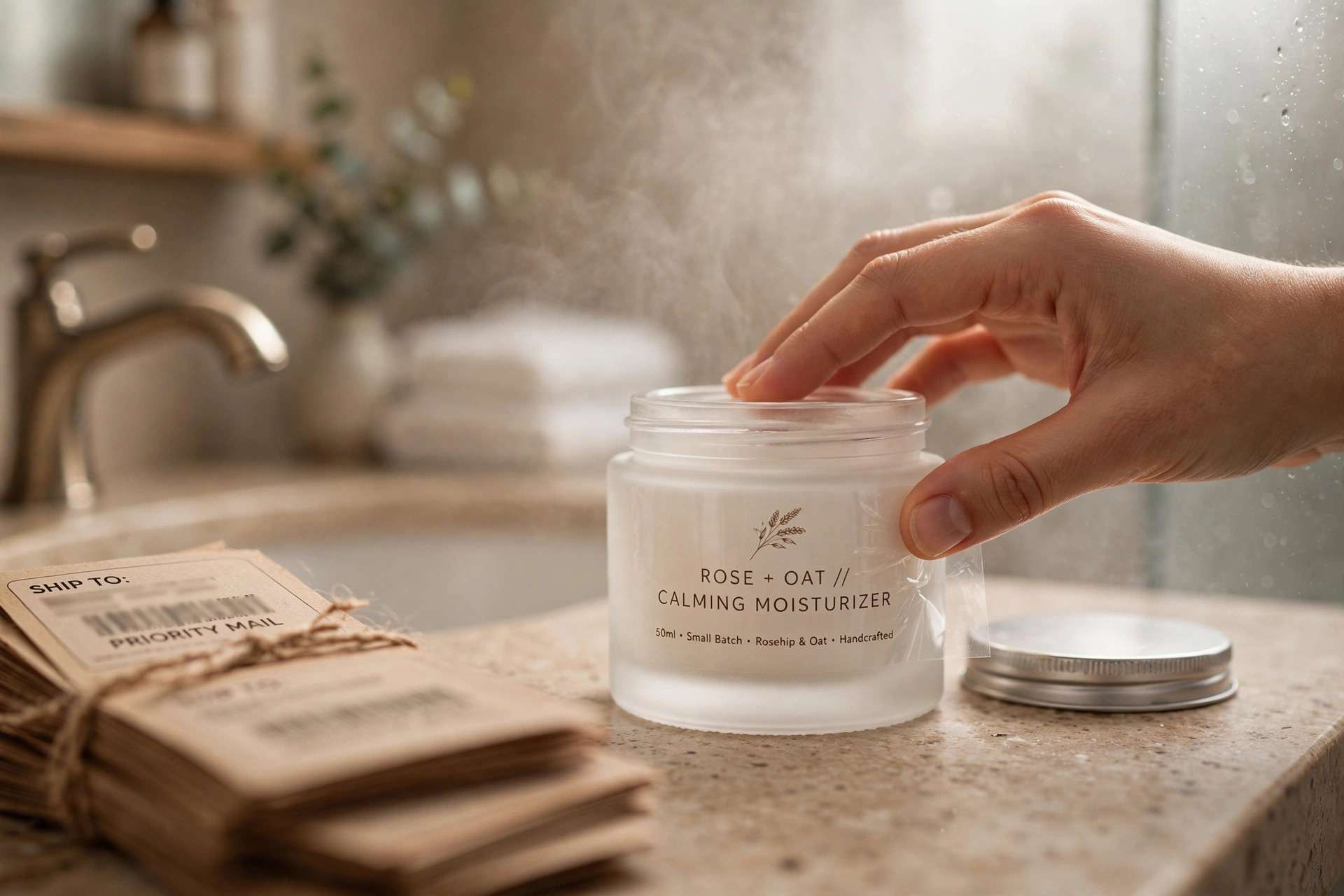
BOPP is the industry standard here — bathroom humidity, oily fingers, and shower steam are its home turf. Vinyl if the product lives poolside or outdoors. Many handmade brands use paper (kraft especially) for the outer shipping box or hang tag, where the natural texture is part of the brand — just keep it away from the product itself. For candle makers, we go deeper in our guide to waterproof labels for candles.
Clothing & Apparel
Paper wins: hang tags, size stickers, and price labels are dry, indoor items where kraft or textured paper looks premium and costs little. If you need stickers for garment bags that might see rain in transit, that’s a BOPP job.
Household, Cleaning & Outdoor Products
Vinyl, no contest. Chemical splashes, outdoor storage, constant handling — this is what vinyl was made for. BOPP works for indoor cleaning products, but if the bottle might sit in a garage or a sunny window, vinyl’s UV resistance is worth the premium.
Frequently Asked Questions
What’s the difference between waterproof and water-resistant labels?
Waterproof means the label survives prolonged water exposure — submersion, rain, dishwashers. Water-resistant means it survives brief contact: a splash, light humidity, a sweaty hand. Vinyl and BOPP are waterproof; coated paper is water-resistant at best. If a supplier says “water-resistant” and you need “waterproof,” ask which material it actually is.
Are BOPP labels really waterproof?
Yes. BOPP is a plastic film — water, oil, and condensation don’t penetrate it. It’s the material behind most waterproof product labels in grocery stores. The one thing to watch: the adhesive and ink matter too. A waterproof film with a water-soluble adhesive can still fail, so confirm with your printer that the full construction (film + ink + adhesive) is rated waterproof.
Can paper labels ever be waterproof?
No — and this is the most expensive misunderstanding in label ordering. Laminated or coated paper resists splashes, but soak it and it fails. If anyone sells you “waterproof paper labels” for a beverage bottle, get the material spec in writing. True waterproofing needs a film: vinyl or BOPP.
Which material is cheapest?
Paper is cheapest, BOPP sits in the middle, vinyl costs the most. But the honest comparison is cost per surviving label: a cheap paper label that has to be reprinted after water damage costs more than a BOPP label ordered once. Quote all three at your actual quantity — the gap between BOPP and paper shrinks fast at volume.
Do vinyl and BOPP labels work on glass and curved bottles?
Yes, with one caveat. Vinyl’s flexibility makes it the safest choice for tight curves and squeeze tubes. BOPP works beautifully on standard bottles and jars; on very small diameters it can lift at the edges over time. For anything under about an inch in diameter, ask your printer — they may recommend vinyl or a specific BOPP adhesive.
How do I know what material my current labels are?
Try the corner test: peel a corner and stretch it gently. Plastic films (vinyl, BOPP) stretch and resist tearing; paper tears immediately. A water drop test also works — on film it beads up; on paper it soaks in within seconds. If you’re reordering from another supplier, bring a sample: a good printer can identify the material on sight.
The Bottom Line
Choosing a label material is really choosing what your label has to survive:
- Vinyl — maximum toughness: outdoors, water, chemicals, tight curves.
- BOPP — the packaging sweet spot: waterproof and oil-proof at a sensible price.
- Paper — dry, indoor, and beautiful: lowest cost with premium texture options.
Start from the harshest thing your label will face, pick the cheapest material that survives it, and you’ll never have to reorder because the labels failed.
Still deciding? Send ZORVOO your product details — what it is, where it’s stored, what it touches — and we’ll recommend the right material, finish, and quantity for your budget, with a free digital proof before anything goes to print.